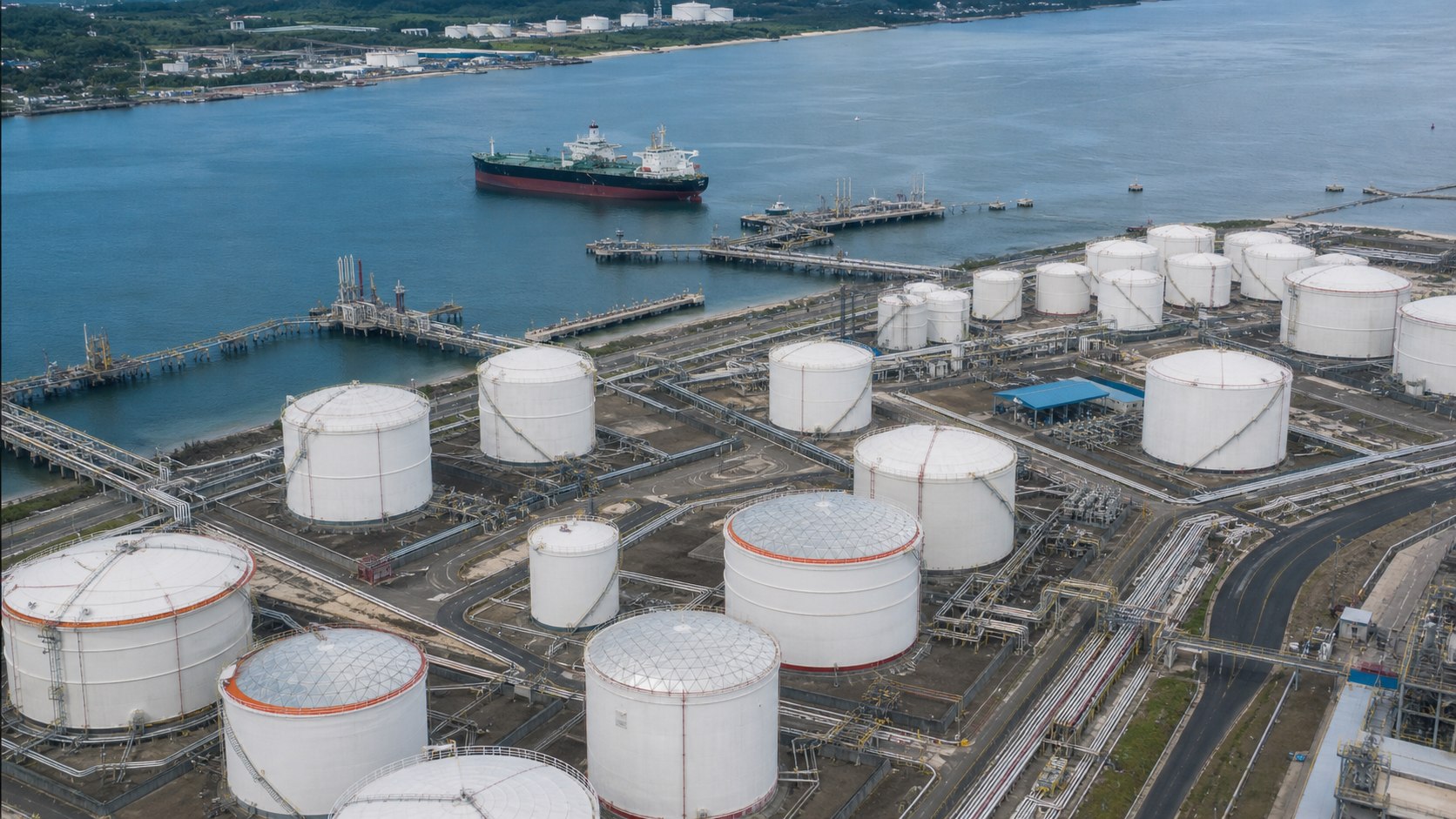
Petroleum rarely moves directly from the point where it is produced or refined to the place where it will finally be consumed.
Between those points sit vessels, pipelines, trucks, transfer systems and storage terminals. Each performs a different role, but the terminal is often where timing is absorbed.
A cargo can arrive before its next vessel is ready. Refinery output can continue while downstream demand changes. Different parcels may need to be accumulated before shipment. Products may need to remain segregated until testing, documentation or a commercial instruction allows them to move.
Storage provides room for those differences.
That is why a terminal should not be understood simply as a collection of tanks.
More than static capacity
A tank only becomes useful infrastructure when it is connected to the systems around it.
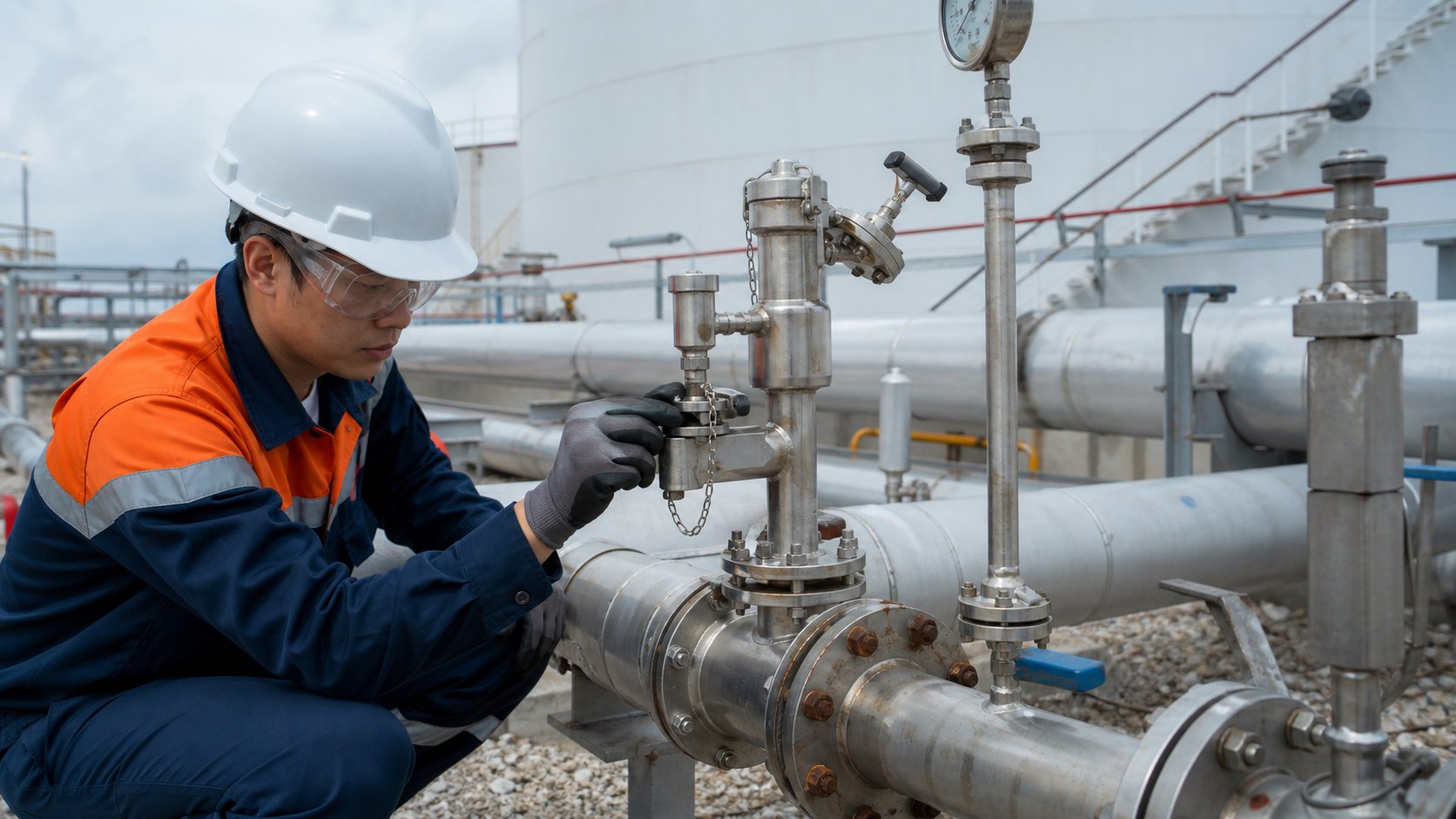
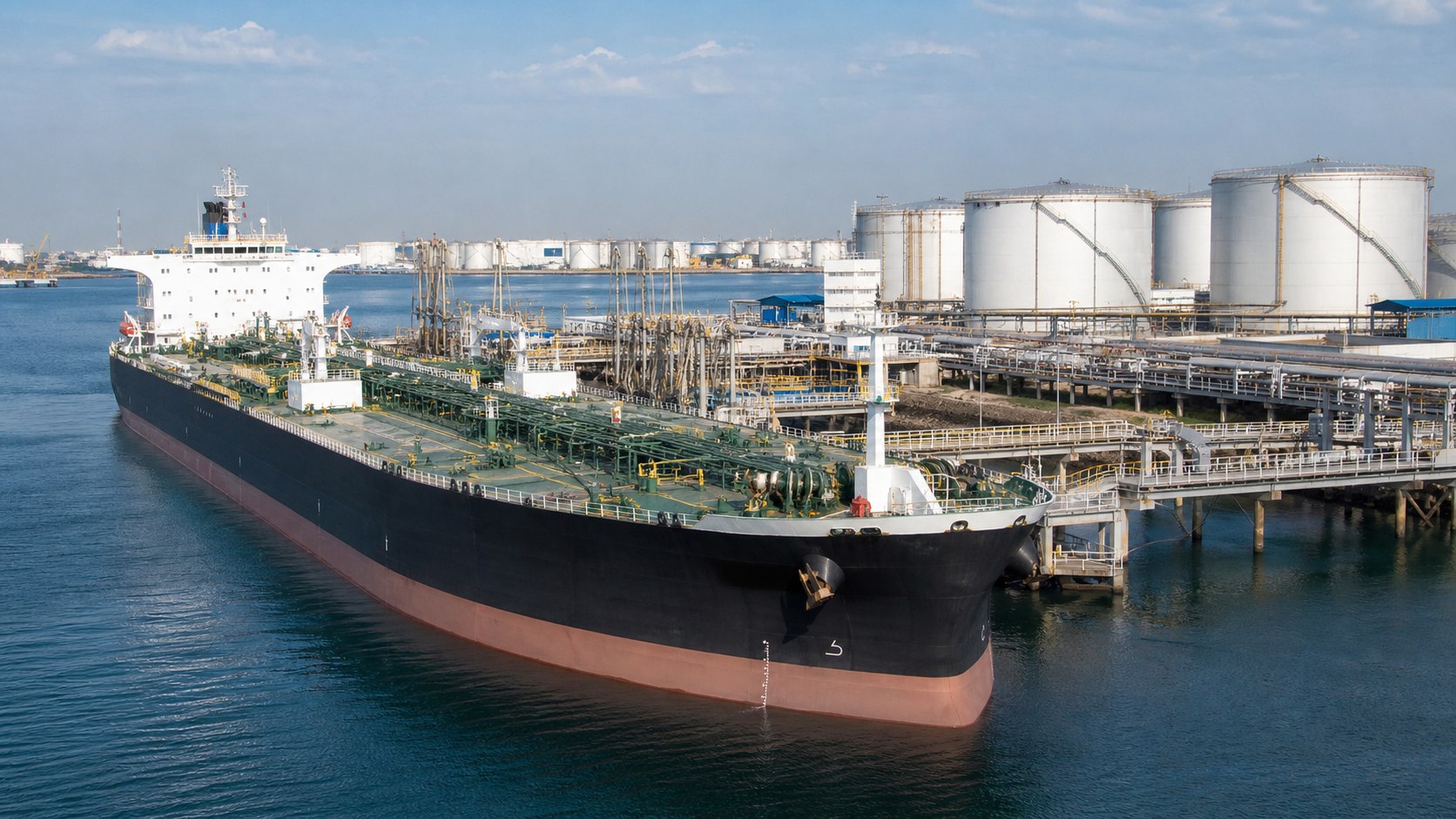
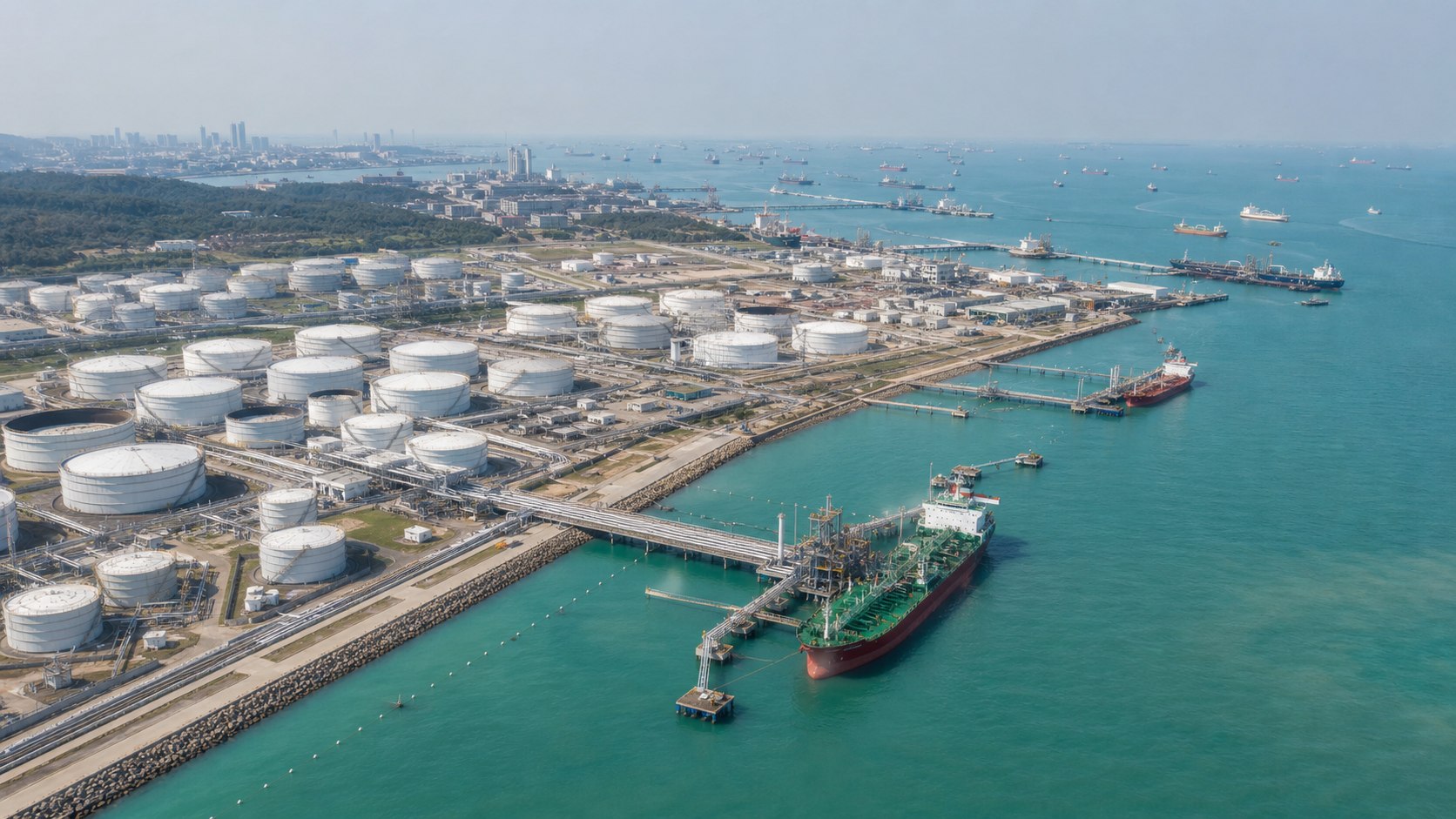
Pipelines move product between tanks and transfer points. Pumps provide controlled movement through the facility. Manifolds allow different transfer routes to be configured. Marine loading arms connect storage to vessels. Metering, sampling and control systems help operators understand what is moving and under what conditions.
The value of the terminal is created by the way those elements work together.
Capacity matters, but so does connectivity.
A facility may have considerable storage space and still offer limited flexibility if products cannot be transferred efficiently between the tank farm, marine infrastructure and onward transportation.
Time is part of the service
Petroleum logistics is highly sensitive to timing.
Vessels operate against schedules. Product nominations change. Weather can affect marine activity. Maintenance can temporarily remove equipment from service. Customers may need to hold a cargo while waiting for another part of the supply chain.
A terminal creates a controlled point between those moving parts.
Storage allows product to remain in a known location while the next movement is arranged.
That flexibility can reduce pressure on other parts of the logistics chain.
Segregation matters
Different petroleum products cannot simply be treated as interchangeable liquids.
Crude grades can have different characteristics. Diesel, fuel oil, aviation fuel and other refined products have different specifications and handling requirements.
Terminal operations therefore depend heavily on segregation.
Operators need to understand:
- what product is in each tank;
- what was previously stored there;
- which transfer lines will be used;
- whether those lines contain another product;
- how much interface may be created during transfer;
- and what operational controls are required.
A storage terminal is therefore partly a physical facility and partly a system of disciplined decisions.
The terminal connects commercial and operational reality
A trader may think in cargoes, contracts and delivery windows.
A vessel operator thinks about arrival, berth conditions and turnaround.
A terminal operator must translate those commercial requirements into safe physical movement.
That means checking whether the correct tank is available, whether the transfer path is appropriate, whether equipment is ready and whether the operation can be performed without compromising safety or product integrity.
The commercial instruction may be simple:
receive the cargo.
The physical operation rarely is.
Infrastructure that creates options
A good terminal gives its users options.
It creates the ability to receive product, hold it safely, segregate different grades, transfer it when required and connect it to the next stage of transportation.
Those capabilities make tank storage an important part of international petroleum logistics.
The tanks may be the most visible part of a terminal.
The real value lies in everything that allows the product to move into them, remain under control and leave again when the supply chain is ready.